Custom Plush Dog Toys Manufacturer China: What Brand Buyers Need to Know

If you are searching for a custom plush dog toys manufacturer China, you probably already know the catalog middle is crowded. Soft toys look similar on Alibaba thumbnails. The differences show up later—when seams split after two weeks of play, when embroidery bleeds in the wash, or when a retail buyer rejects a carton because the care label is wrong.
This guide is written for brand owners, private-label sellers, and wholesale buyers who need plush that survives real dogs, real logistics, and real compliance checks—not just a pretty photo.
Why plush is harder than it looks
Plush dog toys sit in an awkward middle ground. They have to feel soft enough for a living-room brand story, yet hold together when a terrier treats them like a job. That tension drives almost every factory decision: fabric weight, stitch density, fill type, eye attachment method, and whether you allow a squeaker at all.
A factory that mostly sews fashion plush for kids is not automatically a good pet plush house. Pet lines take more abuse. If the sewing room has never run reinforced seams or double-stitched stress points on ears and limbs, you will learn that on Amazon returns, not on the sample table.
When you evaluate a custom plush dog toys manufacturer China, ask what share of output is pet vs human plush. The answer should change how hard you push on durability tests.
Who this search is really for
Most buyers who land on this keyword fall into a few groups:
- DTC brands that want a signature character plush (mascot, breed series, limited collab)
- Amazon / marketplace sellers who need a private-label refresh without inventing tooling from scratch
- Retailers and distributors building a seasonal or value-tier soft-toy set
- Brands that already sell hard chew toys and want a softer SKU to round out the line
If your dog product is a heavy power chewer rope or solid rubber, you are in a different supply chain. Plush is fabric, fill, embroidery, and finishing. Treat it like apparel plus toy safety, not like rubber molding.
Browse related SKU directions on our [products catalog](/products) if you are still deciding plush vs silicone vs rope for the first drop.
Spec checklist before you RFQ
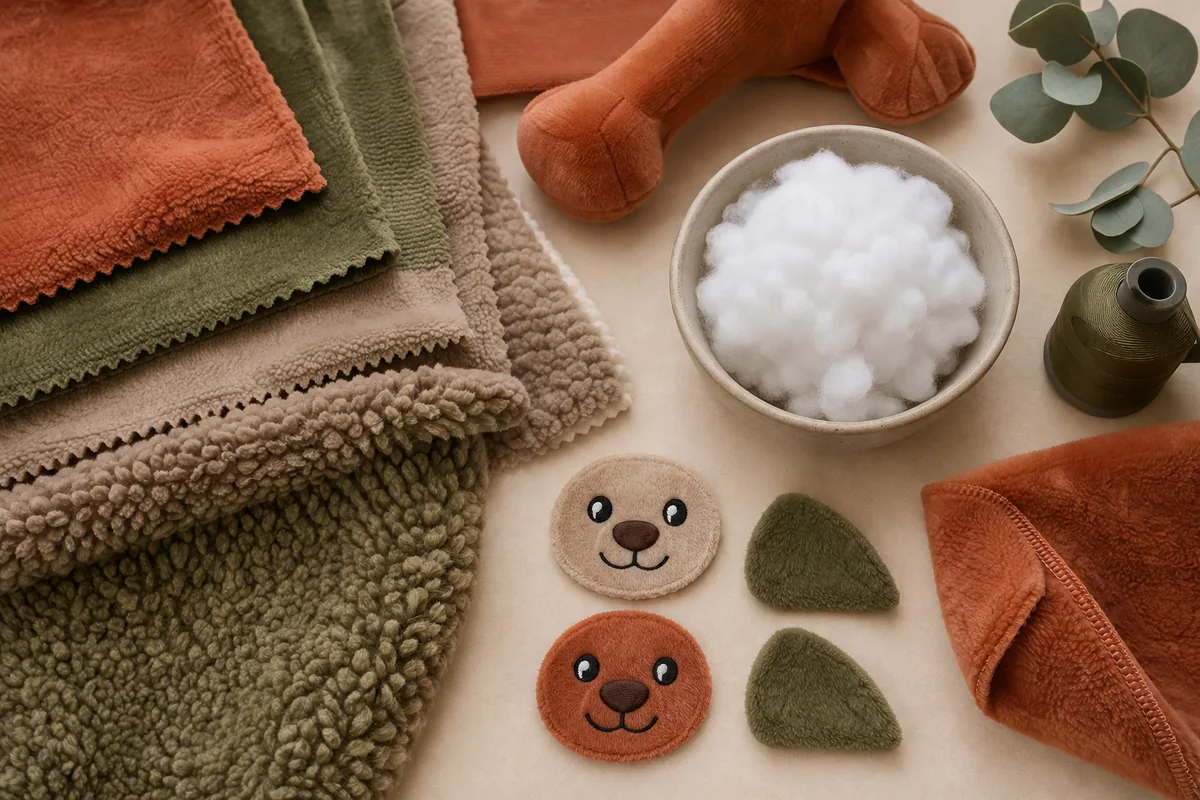
Vague briefs create expensive samples. Send something a production manager can quote without guessing.
Product and play style- Target dog size band (toy / small / medium / large) and whether the toy is for gentle play, moderate chew, or “decorative until it gets destroyed”
- Approx finished size (e.g. 18 cm body, 25 cm with legs)
- Character type: animal, food shape, geometric, licensed-look (if IP is cleared)
- Outer fabric: short plush, long pile, sherpa, corduroy, canvas panels for high-wear zones
- GSM or pile height if you care about hand-feel consistency across reorders
- Fill: polyester fiberfill density range; some buyers mix a small % of recycled fill for a sustainability claim—confirm claims with documentation, not marketing copy
- Optional insert: squeaker (count and type), crinkle paper, rope limbs
- Seam type and stitch density at stress points
- Nose/eye method: embroidered only vs plastic with locking washers (plastic components need stricter small-parts discipline)
- Reinforced openings if you want washability without fill migration
- Woven label, printed hangtag, heat-transfer logo, embroidery logo placement
- Polybag print, carton marks, barcode, multi-language warnings for US/EU
- Destination markets and required tests (commonly CPSIA / lead & phthalates thinking for US, REACH / EN71-related chemical and mechanical screens for EU when the product could be treated like a toy in retail)
A complete brief shortens sample rounds. Factories quote faster when they are not inventing your product for you.
MOQ reality for custom plush
Custom plush MOQ is usually driven by fabric dyeing, embroidery digitizing, and line changeover—not by how “nice” the factory sounds on WeChat.
Rough patterns many brand buyers see:
- Catalog-adjacent private label (colorway + label + hangtag on an existing body): often lower MOQ, sometimes a few hundred units per SKU if the factory already runs that body
- Fully custom shape + new fabric color: higher MOQ, frequently mid-hundreds to low thousands depending on complexity
- Multi-SKU character family: negotiate shared fabric and shared fill to keep per-SKU volume workable
Ask for MOQ per colorway, not only per style. A “500 pcs MOQ” that actually means 500 per color is a different P&L.
If you need a true brand build with unique shapes, talk through development paths on [ODM services](/odm) and [private label](/private-label) before you lock a number that only works on paper.
Sampling: timeline and what to pay for
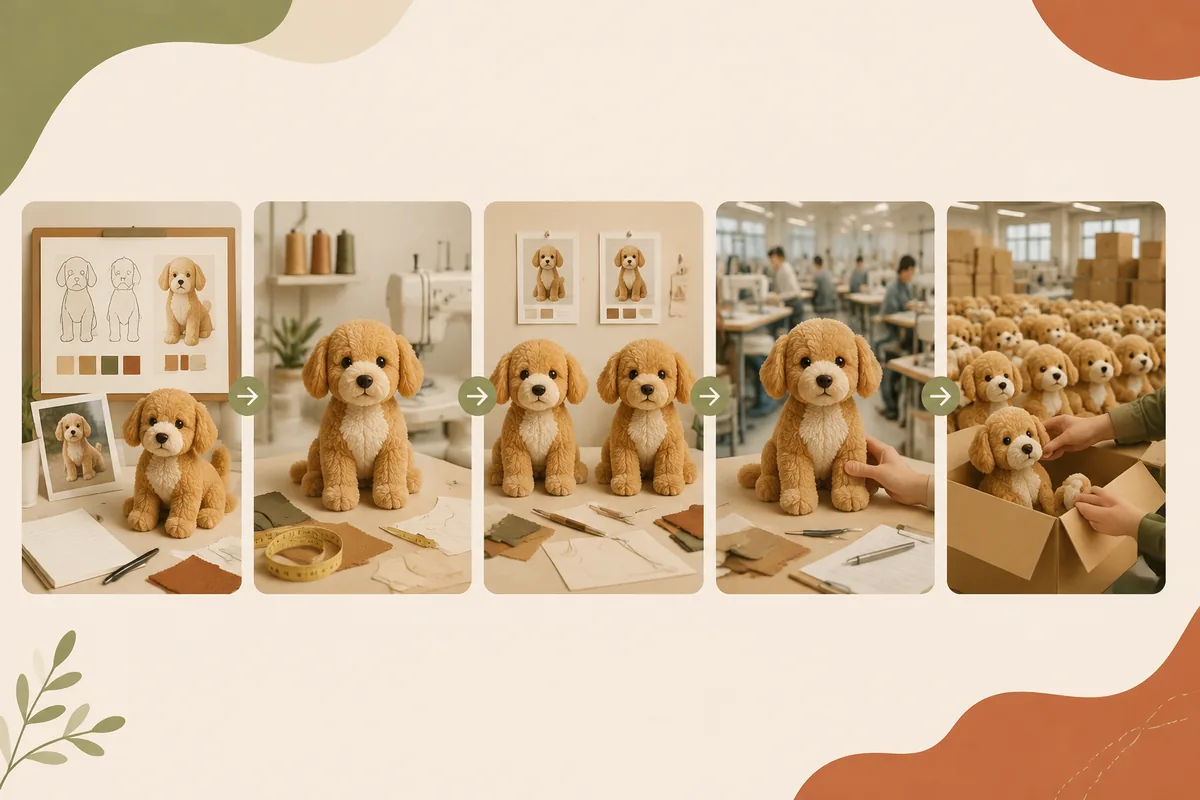
A workable sequence for custom plush:
1. Brief + feasibility (2–5 business days): fabric suggestions, construction notes, risk flags (e.g. long pile + dark dye + white embroidery)
2. Proto / first sample (often 10–20 days if no heavy new tooling): hand-feel and silhouette check
3. Revision sample: fix size, face embroidery, limb proportions, squeaker placement
4. Pre-production sample (PPS): the golden unit locked to the PO
5. Bulk with in-line checks and final inspection
Budget for sample freight both ways and for at least one paid revision. Free samples that skip your actual fabric and embroidery specs are not free—they just move the cost into a bad bulk run.
Photo samples are fine for early shape talk. Do not approve bulk on photos alone for plush. Color, pile direction, and stitch quality need a physical unit under daylight, not only under factory ring lights.
Quality control that actually matters for plush
Multi-stage QC is not optional if you sell under your own brand name.
Incoming- Fabric shade lot consistency
- Fill odor and clump checks
- Trims and labels correct before sewing starts
- Pattern piece accuracy
- Seam allowance consistency
- Embroidery registration (eyes not “drunk,” logos not crooked)
- Stuffing weight within tolerance so units feel the same on shelf
- AQL visual for stains, loose threads, uneven fill
- Pull tests on sewn-on parts
- Squeaker function sample rate
- Wash test on a small batch if you claim machine-washable
For first production, ask for photos or short video at cutting, mid-line, and packing. Keep a defect log shared with the factory. Reorders improve when the factory sees the same issue written down twice.
If US/EU retail is the goal, schedule lab tests so certificates exist before cargo booking. Testing after the container is sealed is how launches slip a month.
Embroidery, print, and logo choices
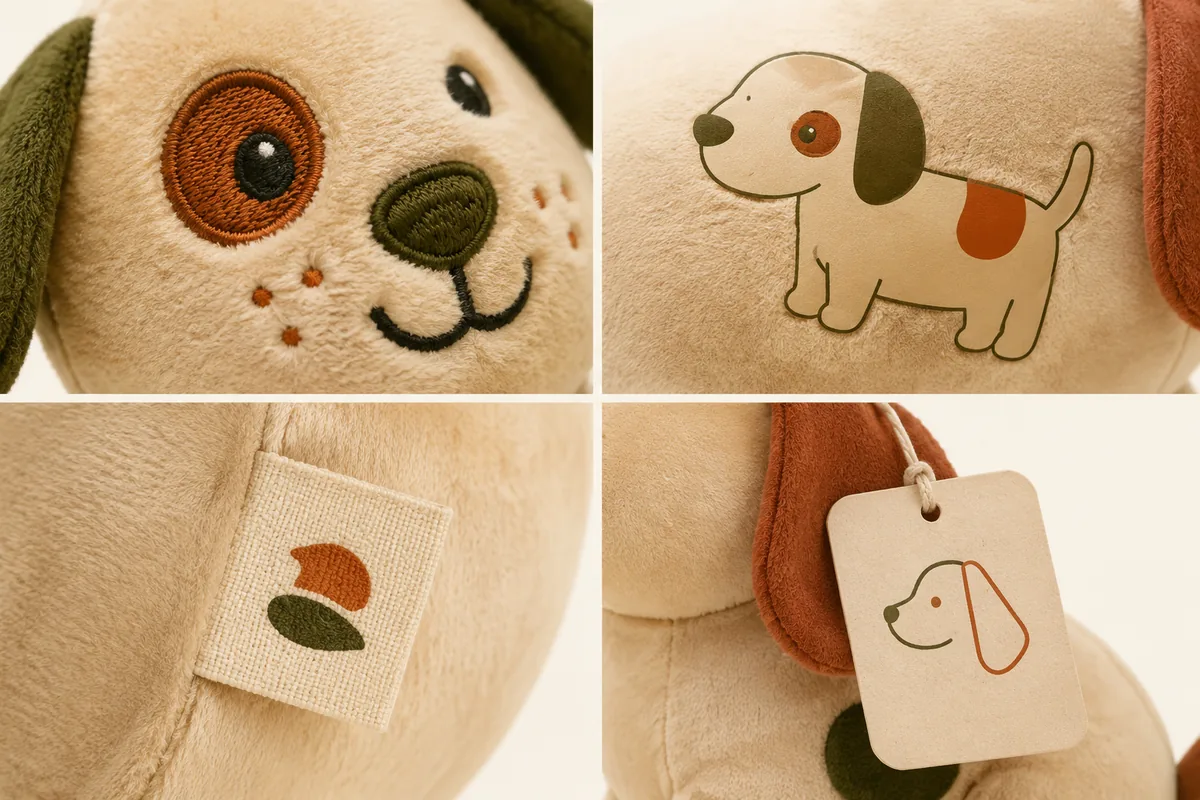
Plush branding is not one technique.
- Embroidery: durable, premium look, higher setup if the design is complex; works well for faces and logos that must survive wash
- Screen / heat transfer: better for gradients or large art; watch crack and peel on flex points
- Woven labels: standard for care + brand identity; place where dogs cannot easily rip them into a choke risk if possible
- Hangtags: retail storytelling; not a durability solution
Share vector art early. Pixel logos and last-minute “make it pop” redesigns burn sample weeks.
Packaging and retail readiness
Soft toys compress. That is good for freight and bad for first impression if you ship a vacuum-packed brick that never recovers.
Align early on:
- Whether units ship bulk polybagged or retail-ready with hangtag
- Polybag thickness and any print/warning text
- Master carton size so you do not overpay dimensional weight
- How the unit should look after 48 hours out of the bag (some buyers require a fluff instruction card)
Marketplace sellers: pack-out photos must match the unit the customer opens. Inconsistent packaging is a quiet killer of reviews even when the plush itself is fine.
Communication and launch calendars
Once the PO is live, weekly updates should cover fabric in-house status, cutting/sewing progress, QC photos, and ship window. Silence is a risk signal.
Pet retail peaks (Q4 gifting, Valentine, back-to-school promos depending on your channel) compress factory capacity. If you need a custom plush dog toys manufacturer China partner for holiday inventory, start sampling earlier than the hard-toy calendar in your head. Embroidery digitizing and fabric dyeing do not care that your Amazon ad campaign is already live.
One decision owner on the buyer side saves more schedule than any production miracle. Conflicting comments from marketing, founder, and agency in the same week will miss the boat.
Common mistakes brand buyers make
- Choosing purely on unit price without freight, testing, packaging, and expected return rate
- Approving a soft, pretty sample that was never stress-tested at seams
- Mixing plastic eyes on a product aimed at heavy chewers without a clear “not for aggressive chewers” position and construction plan
- Changing fabric mid-sample without re-quoting
- Assuming the factory knows your market’s warning language and barcode rules
- Ordering bulk before PPS sign-off in writing
- Treating plush MOQ like rubber MOQ—different constraints
How WagNab fits custom plush programs
WagNab works with brand and wholesale partners on pet toys from material selection through sampling and bulk. If you are comparing soft lines against other constructions, start with the live range on [products](/products). For unique shapes and development, see [ODM](/odm). For logo-led brand builds on proven constructions, see [private label](/private-label).
Teams that search custom plush dog toys manufacturer China usually get the best results when they send a short, boring brief: target dog size, play intensity, preferred fabric hand-feel, logo method, first-order quantity, and destination market. From there you can map a realistic sample plan and flag compliance work before anyone spends on bulk fabric.
Decision checklist before the PO
- Spec sheet signed and versioned (fabric, fill weight, dimensions, branding)
- Physical sample approved in writing (PPS locked)
- QC plan and AQL agreed, including what happens on fail
- Packaging dieline and label copy approved
- Incoterms, payment terms, lead time, and late-shipment terms on the PO
- Lab test plan timed to production, not after sailing
- One revision cycle budgeted without killing the launch window
If any of that is still “we’ll figure it out on WeChat,” pause. Most plush disputes after shipment come from unwritten assumptions, not from factories trying to cheat you.
Related WagNab resources
- Explore the full catalog of custom and wholesale options: [pet toys products](/products)
- Learn about OEM/ODM development: [ODM pet toy manufacturing](/odm)
- Launch your brand line with [private label pet toys](/private-label)
- Ready to talk MOQ and sampling? [Contact WagNab](/contact)
Next step
A custom plush dog toys manufacturer China partnership works when you treat it as a production process: clear specs, physical samples, written QC, then scale. Price matters, but process protects your brand when the first carton hits a warehouse.
When you have a SKU brief and target markets, [contact WagNab](/contact). Share dog size band, fabric preference, logo method, first quantity, and ship-to country—we will come back with sampling options and honest lead times, not a one-size MOQ poster.
Ready to Build Your Next Collection?
From material selection to final delivery, we help brands bring pet toys to market.