How to Choose the Right ODM Partner for Your Pet Brand

I've watched a $47,000 shipment of plush dog toys get seized at the Port of Long Beach because the factory used a stuffing material that wasn't on the CPSIA paperwork they'd submitted. The buyer — a mid-sized pet brand out of Austin — had been sourcing from that factory for eight months. They'd visited. They'd sampled. They'd done everything right on paper. What they hadn't done was ask the factory to prove material traceability before scaling to a full container.
The toys sat in customs for 11 weeks. The brand missed their Q4 retail window and liquidated at 60% below wholesale. The factory apologized and offered 5% off the next order. Real helpful.
Stories like this aren't rare. In 15 years working with pet toy factories across China, Vietnam, and India, I've seen the same preventable patterns. If you need an ODM partner who can actually deliver — not just a factory with polished catalogs and friendly WhatsApp messages — here's the framework to use.
Red Flags When Vetting Factories
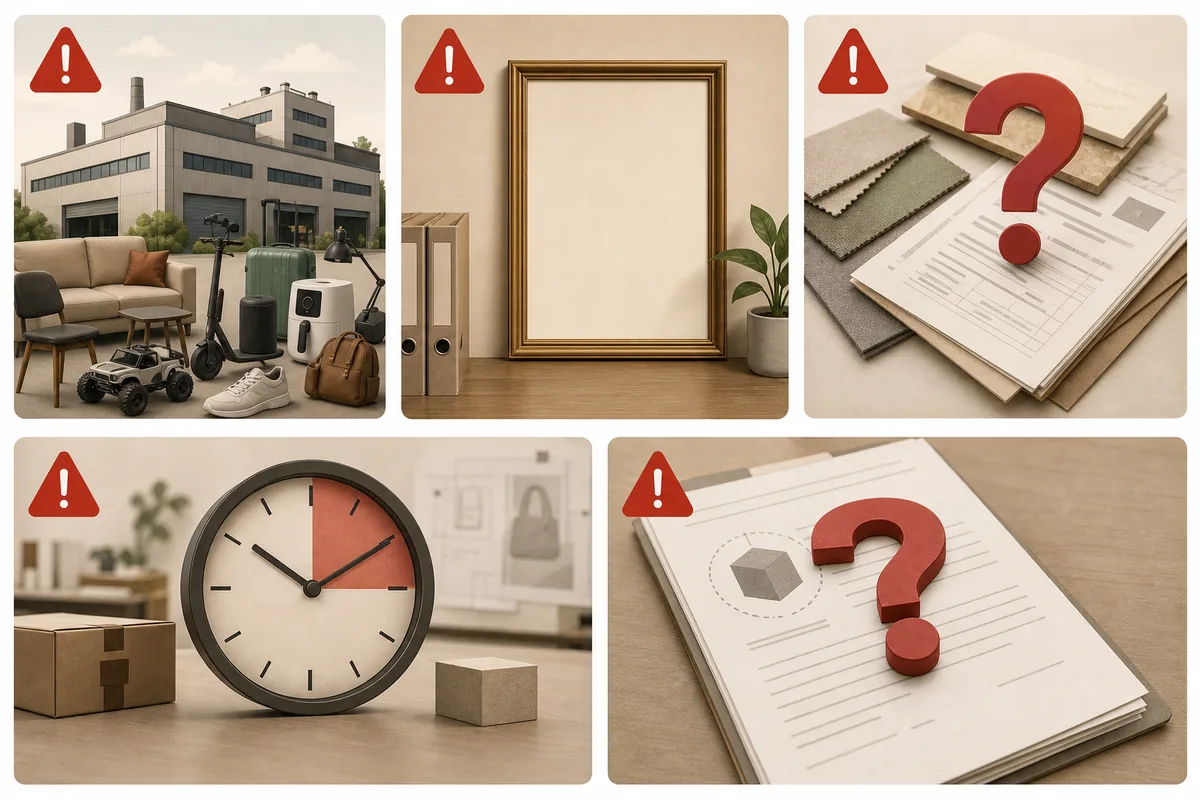
Most red flags aren't dramatic. They show up early if you're paying attention.
The "We Can Do Everything" Factory
Walk into a factory claiming to do rope toys, injection-molded nylon chews, plush with squeakers, and TPR treat-dispensing puzzles all under one roof — and do all of them well — and walk right back out. The tooling and material handling for a TPR chew toy is completely different from what's needed for a double-stitched canvas tug toy. A factory running both on the same floor is either subcontracting half the work or doing several things mediocre.
One brand I consulted for discovered six months in that their "full-service ODM" was outsourcing all plush work to an unaudited workshop 40 minutes away. They only found out when a retailer's social compliance team flagged it. By then, 14,000 units were already in PetSmart distribution centers.
The fix: Ask for a floor walk — in person or via live video. Count distinct production lines. Ask what percentage of annual volume each category represents. A factory doing 80% plush and 20% "other" is a plush factory. Treat everything else as experimental.No Third-Party Audit History
If a factory can't produce an audit report from the last 18 months — from SGS, Bureau Veritas, Intertek, or equivalent — that's not a yellow flag. It's red. I'm not talking about the ISO certificate in the lobby. I'm talking about a social compliance and quality systems audit with dates, corrective action follow-ups, and a report you can read yourself.
Factories with nothing to hide send audit reports immediately. Factories that "need to check with management" and never follow up are telling you something. Make a recent third-party audit non-negotiable before your first purchase order. If they haven't been audited, offer to split the cost ($1,500–$3,000). Their reaction to that offer tells you more than any brochure will.
Vague Material Sourcing Answers
Ask a factory where they source their cotton rope from. A good one says: "We buy 16-ply cotton rope from [specific supplier] in Shandong. They've been our primary supplier for six years. We can provide mill certificates and REACH compliance docs for your batch."
A factory to worry about says: "We have many suppliers, always best quality, don't worry."
Pet toys go in animals' mouths. Materials matter more than they do for furniture or apparel. A rope toy shedding fibers causes intestinal blockages. A rubber chew leaching plasticizers makes dogs sick. The factory must know — and be willing to document — exactly what's in your product and where it came from.
5 Questions to Ask Before Signing
Ask these over email, where answers become part of the written record.
1. "Walk me through your sampling process — from sketch to approval. How long per stage, and what happens if we're not happy by round three?"
A factory with a real process gives specifics: "Digital mockup within 3 business days. Physical sample 7–10 days after mockup approval. Each revision round 5–7 days." They'll assign a dedicated development contact — not just the sales rep.
A factory without one says "we can do samples, how many pieces?" and goes dark for three weeks.
Also ask: how many sampling rounds do new clients typically go through? Good factories average 2–3 rounds. Anyone claiming they always nail it in round one hasn't worked with brands that have real design standards.
2. "What's your actual minimum order quantity per SKU — not the website number, but what you need to run a dedicated line?"
Factory MOQs are often aspirational. A factory advertising 500 units might need 2,000 to justify a dedicated production line. At 500, you're filler between larger runs — your timeline is at someone else's mercy.
Ask what changes at 500 vs. 2,000 vs. 5,000 units. A transparent factory gives you tiered breakdowns for pricing and production priority. Also ask about MOQ flexibility on reorders. Some factories drop MOQs 30–40% once tooling is amortized and production teams know your specs. Get it in writing.
3. "Send me full compliance documentation — CPSIA certificates, EN 71 test reports, and REACH SVHC declarations for my specific materials."
This question separates serious suppliers from catalog-forwarding operations.
CPSIA (U.S.): Pet toys aren't legally children's products in the U.S., but major retailers (PetSmart, Petco, Target, Chewy) apply CPSIA-level standards regardless. Lead content limits (90 ppm for substrates), phthalate restrictions, and mechanical hazard testing are baseline expectations. If the factory looks confused when you reference 16 CFR Part 1303, they haven't worked with tier-one retail. EN 71 (EU): For European markets, EN 71 Part 1 (mechanical/physical), Part 2 (flammability), and Part 3 (migration of elements) are non-negotiable. A squeaky toy must survive torque and tension tests without the squeaker becoming accessible — a detail many factories learn the hard way. REACH (EU): The SVHC candidate list updates twice yearly. A 2024 REACH declaration may not cover 2025 or 2026 restrictions. Your factory should reference the current list, especially for phthalates like DEHP, DBP, BBP, and DIBP common in softened plastics.For a deeper dive: [Pet Toy Safety Standards: CPSIA, EN 71 & REACH Explained](/blog/pet-toy-safety-standards-cpsia-en71-reach). Don't accept "our products pass all international standards" as an answer. Request actual PDF reports — with lab names, dates, and batch numbers.
4. "Who's my day-to-day contact after the PO is signed, and what's your guaranteed response time?"
The person answering emails during courtship is almost never the person managing your order on the factory floor. Ask for your production coordinator's name and title before signing. Send them a message and see when you hear back. Response patterns during sampling predict response patterns during production.
Good communication infrastructure includes: a dedicated project coordinator (not the salesperson), a guaranteed 24-hour response window, weekly production updates with photos sent proactively, and English proficiency sufficient for technical discussion. Misunderstandings about seam strength or material density cost thousands.
5. "What happens to my molds, patterns, and designs if we stop working together?"
IP protection in ODM relationships depends less on contracts (hard to enforce across borders) and more on structural control. Get three things in writing: you own all tooling you paid for, with return or destruction on request; your designs cannot be used for other clients; and the factory cannot sell "excess inventory" through alternate channels.
That last one burns brands most. A factory produces 10,200 units on a 10,000-unit order for QC margin. The extras appear on AliExpress at 40% of your retail price. "Mistake at the warehouse." It wasn't.
Practical protections: engrave your brand name into the mold itself. Use proprietary color formulations. Split production across multiple factories so no single partner holds your entire catalog.
The Price Trap: Why the Lowest Quote Almost Never Wins
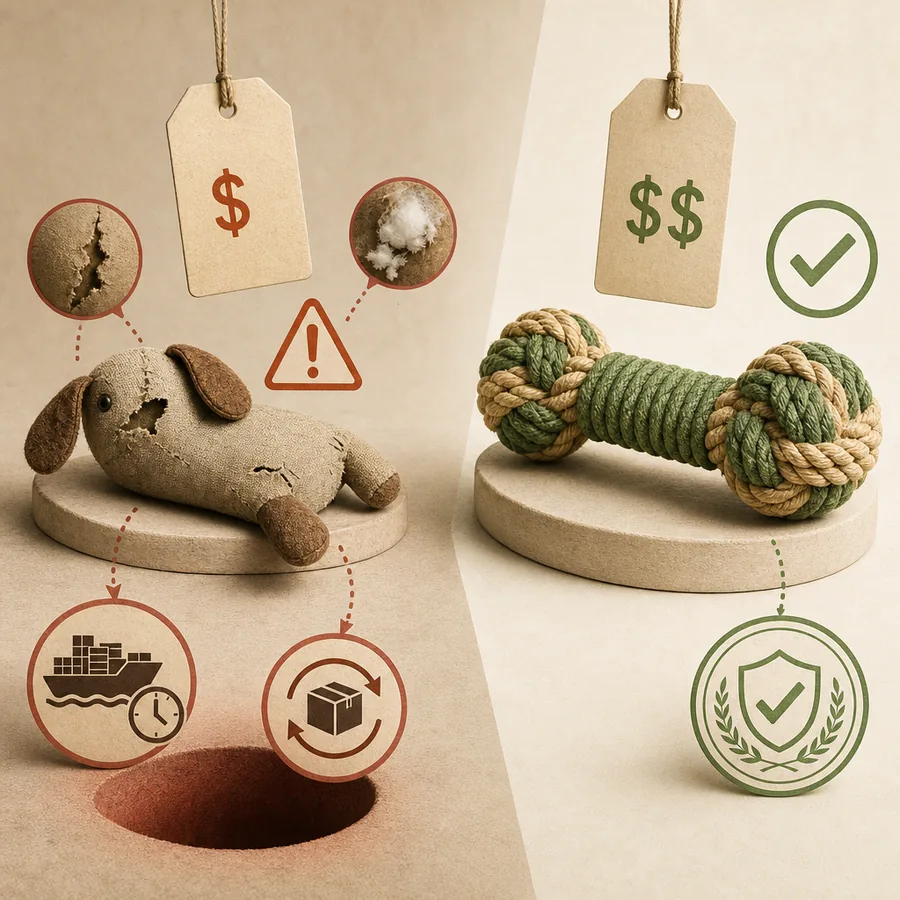
A brand gets three quotes: $1.80, $2.15, and $2.40 per unit. They take the $1.80 quote. Twelve months later, after air freight for late shipments, rework on QC failures, and chargebacks from retailers — landed cost is closer to $3.10.
What's Actually in the Price
A factory quoting well below competitors is usually doing one of these:
Cheaper materials than specified. Your sample used $4.20/kg TPR from a Korean supplier. Production units use $2.80/kg from a local compounder without the same certifications. The toys look identical. They fail after three months. By then, your reviews are written. Skipping QC steps. Proper inline inspection at 20%, 50%, and 80% of production, plus AQL random sampling before shipment, costs money. A factory cutting their quote to the bone does maybe one inspection at the end. One brand received a container where 22% of units had non-functional squeakers because insertion wasn't checked mid-production. Paying workers less. Beyond ethics, this is a continuity concern. High turnover means inconsistent output — the team that made your samples may not be on your production run.The Real Numbers
From a plush dog toy project in 2024 — quoted FOB prices for a 12-inch squeaky plush (cotton canvas, double-stitched, recycled PET fill):
- Factory A: $1.65/unit (lowest)
- Factory B: $2.05/unit (mid-range, audited, dedicated QC)
- Factory C: $2.40/unit (premium, in-house materials lab)
Factory A's actual landed cost after: 8% air freight surcharge (late shipments), 4.2% rework cost, $1,850 in additional third-party testing, and one lost retail placement — came to approximately $2.85 per unit. Factory B's total: $2.30. Factory C's: $2.60.
The cheapest quote cost 24% more than the mid-range option when real-world logistics were included. The most expensive factory is the one that doesn't ship on time with product that passes QC.
Building Long-Term Relationships
ODM relationships that last beyond the first production hiccup aren't built on contracts. They're built on aligned incentives and personal relationships with the people running your line.
Visit the Production Floor
The conference room with leather chairs and the fruit platter isn't where your toys get made. Spend at least four hours walking production. Watch how workers handle materials. Check whether safety equipment is actually used. Talk to line supervisors — not the owner — about rush orders and raw material delays.
A practical tip: use the bathroom. If worker bathrooms are clean with soap and running water, management pays attention to details that don't affect the sales pitch. If they're not, ask what else is being cut.
Pay Fairly and on Time
Factories prioritize clients who pay on time and don't nickel-and-dime change orders. Western brands sometimes treat 60-day or 90-day terms as standard without realizing that for a mid-sized factory in Dongguan, waiting 90 days on a $60,000 order creates real cash-flow pressure. That pressure reaches material suppliers, workers, and quality control. Net 30 with 30% deposit is common and functional.
Share Your Roadmap
Factories deliver their best work when they know what's coming. Share your product roadmap six to twelve months out. If you're planning [eco-friendly pet toys](/blog/eco-friendly-pet-toys-sustainability), give them time to qualify sustainable material suppliers. If you're expanding into [new categories](/products), let them plan capacity. A factory that knows your fall order will be 40% bigger than spring can reserve line time in June. One that finds out in August is scrambling.
Use Multiple Suppliers
The healthiest ODM partnerships are ones where neither side feels trapped. Two or three qualified suppliers — with one getting 60–70% of volume — keeps everyone sharp. It also protects your business if one factory faces a fire, labor shortage, or material disruption.
ODM vs. OEM
For emerging pet brands, starting with [ODM products](/odm) — selecting from a factory's existing catalog and customizing colors, materials, and branding — is faster and less capital-intensive than full OEM. You validate product-market fit without spending $5,000–$15,000 on new molds per SKU. Once you know what sells, invest in proprietary tooling.
FAQ
How long should vetting take before a first order?Six to eight weeks minimum: documentation review (1–2 weeks), sampling (2–3 weeks), reference checks (1 week), contract negotiation (1–2 weeks). Anyone promising introduction-to-production in two weeks is skipping steps that exist because skipping them is expensive.
Should I hire a sourcing agent?Under $30,000 annually, agent fees (5–10%) eat too much margin — visit factories yourself. Above $50,000, a good agent pays for themselves through pricing, QC oversight, and prevented problems.
What if I can't visit in person?Request a live video walkthrough — not pre-recorded. Hire a third-party inspector (SGS, Bureau Veritas, QIMA) for an on-site audit before ordering. Budget $1,500–$2,000. If the factory resists, treat that as data.
How many factories should I evaluate?Start with eight to ten. Narrow to three to five after documentation review. Sample with two to three. Order from one or two. Each stage costs money and time — the funnel narrows accordingly.
What's a reasonable defect rate?For sewn plush toys: AQL 2.5 (max 2.5% major defects). For rubber and plastic toys: AQL 1.5. If your factory can't consistently hit these numbers, their processes need work.
The Bottom Line
Choosing an ODM partner isn't about the best catalog photos or the lowest unit price. It's about finding a manufacturing partner who communicates honestly, documents everything, and has the production discipline to deliver what they promised, when they promised it.
The brands that win in pet aren't always the ones with the biggest marketing budgets. They're the ones whose products show up on time, pass retail compliance without drama, and don't generate complaints about seams splitting on week two. That reliability starts with factory selection — not the purchase order.
Ready to find a manufacturing partner who treats your brand like a long-term investment? [Explore WagNab's ODM capabilities](/odm) or [browse our product catalog](/products) to see what's possible when a factory actually cares about quality.
Have questions about vetting factories or navigating compliance requirements? Get in touch — we've been on both sides of this conversation and we'd rather help you get it right than watch another brand learn the hard way.Ready to Build Your Next Collection?
From material selection to final delivery, we help brands bring pet toys to market.